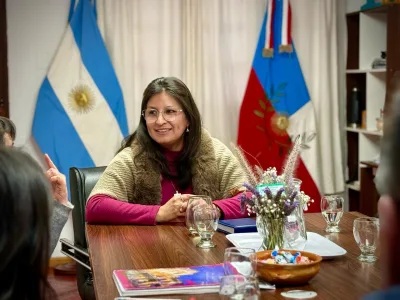
Erica Yamila Inga
Intendente/a
Santa María
"We build a more sustainable Santa María, promoting local development, innovation, and commitment to the well-being of present and future generations."
"We build a more sustainable Santa María, promoting local development, innovation, and commitment to the well-being of present and future generations."
The Municipality of Santa María is the head of the homonymous department and one of the main urban and tourist centers in the west of the province of Catamarca. Known as the Capital of the Calchaquí Valleys and Santa María del Yokavil, it is distinguished by its extraordinary archaeological heritage, its cultural identity, its agricultural and artisanal production, and its imposing Andean landscapes.
History
The Yokavil Valley was inhabited since pre-Hispanic times by indigenous peoples who developed one of the most important cultures of the Argentine Northwest: the Santa María Culture. Subsequently, the valley was incorporated into the Inca Empire and, after the arrival of the Spanish, the first religious missions were established. Historical tradition recognizes the year 1710 as that of the founding of the town, linked to the settlement of Ambrosio Muñiz Cansinos, celebrated every February 2, in honor of the Virgen de la Candelaria, patron saint of the city.
Location
Santa María is located in the westernmost part of the province of Catamarca, in the Yokavil Valley or Santa María Valley, on the right bank of the Santa María River. It borders the provinces of Tucumán and Salta and constitutes a strategic connection point between the Calchaquí Valleys. It is located approximately 1,850 meters above sea level, with a departmental area close to 5,740 km².
Main characteristics
Capital of the Calchaquí Valleys.
Important archaeological heritage with sites such as Cerro Pintado, Rincón Chico and La Ventanita, protected as National Historic Monuments.
Arid mountain climate, with warm summers and cold winters, ideal for tourism throughout the year.
Renowned for the production of capia corn, high-altitude wines, walnuts, paprika peppers, and textile and ceramic crafts.
Outstanding destination for archaeological, cultural, gastronomic, religious, and nature tourism.
Cradle of important traditional festivities, including the National Festival Santa María la Reina del Yokavil, the Capia Festival, and the celebrations in honor of the Virgen de la Candelaria.
Identity
Santa María is a territory where ancestral history, Andean culture, and productive development coexist. Its rich heritage, the hospitality of its people, and the preservation of its traditions make it one of the most representative destinations in the Argentine Northwest and a benchmark for cultural and archaeological tourism in Catamarca.
Industries and sectors that Santa María seeks to attract to its territory.
Incentives for the establishment of companies in Santa María (Catamarca)
The Municipality of Santa María promotes private investment and productive development through a policy of support for companies, industries, and ventures.
Available benefits
Santa María offers a favorable environment for business growth, combining the availability of industrial land, tax incentives, trained human resources, and strong articulation between the public and private sectors to drive new investments.
Available regulatory documents for understanding the local framework for establishment, investment and productive development.
This municipality has no published ordinances yet.
Documents are published as PDF files from the admin panel.Tell us what you offer or what project you want to develop in this municipality. RAMCC will review the request before forwarding it.